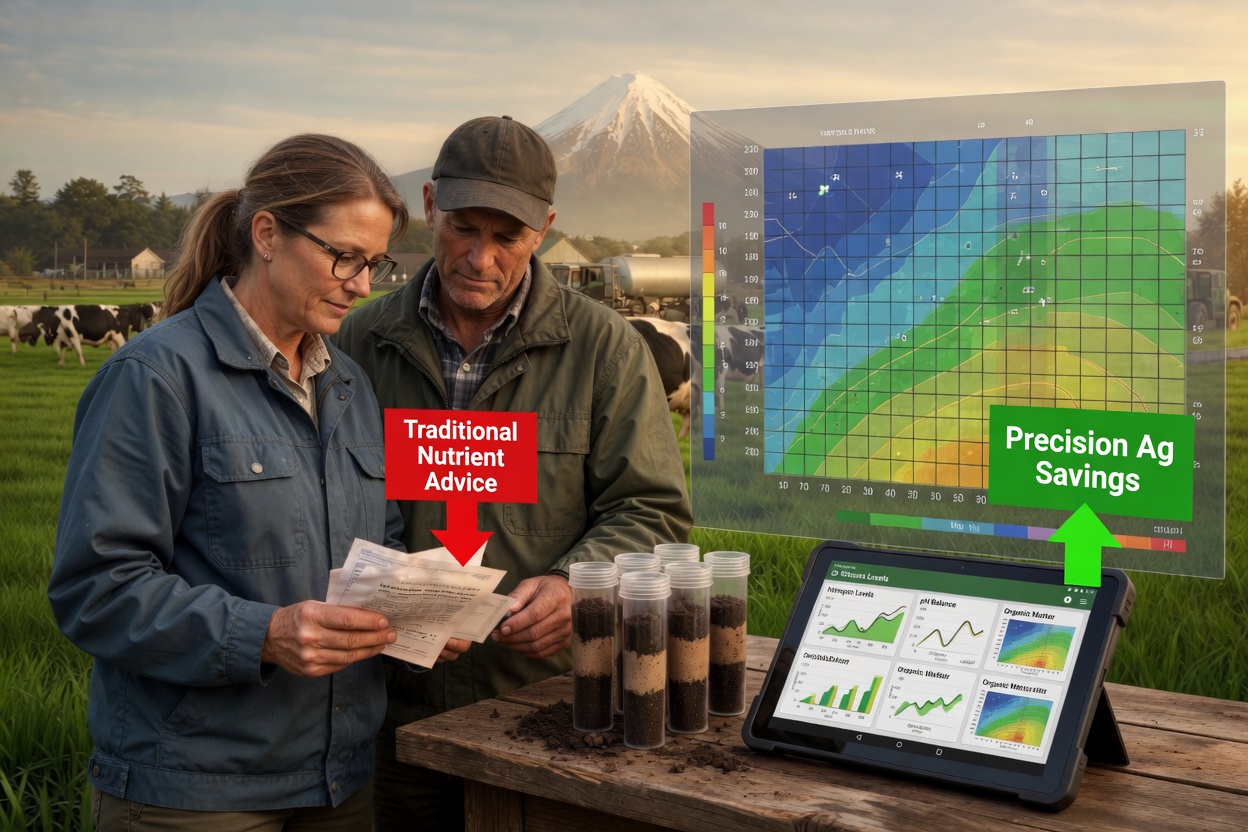
Dairy remains the backbone of New Zealand’s export economy. Yet the sector finds itself squeezed between intensifying environmental regulations, volatile milk payouts, and rising input costs. Regional councils rely heavily on nutrient budgeting tools to set limits on nitrogen and phosphorus losses. Farmers have invested significantly in Good Farming Practices, stock exclusion, better effluent management, and strategic fertiliser use. National data shows that by 2023, 64% of dairy land had implemented these measures, delivering an estimated 20% reduction in nitrogen losses and 14% in phosphorus losses compared to 2015 levels.
Despite this progress, a gap is widening. Precision agriculture technologies, variable rate fertiliser application, detailed grid soil testing, real-time sensors, satellite monitoring, and advanced irrigation scheduling, are available and delivering results on the ground. Yet much of the day-to-day nutrient advice farmers receive still relies on traditional maintenance calculations based on stocking rate, milk solids production, and average dry matter growth.
Are Kiwi dairy farmers effectively paying the price, in lost profit, unnecessary compliance burden, and foregone environmental gains, because nutrient management advice and regulatory frameworks haven’t fully caught up with the technology available?
A Real-World Example from Reporoa
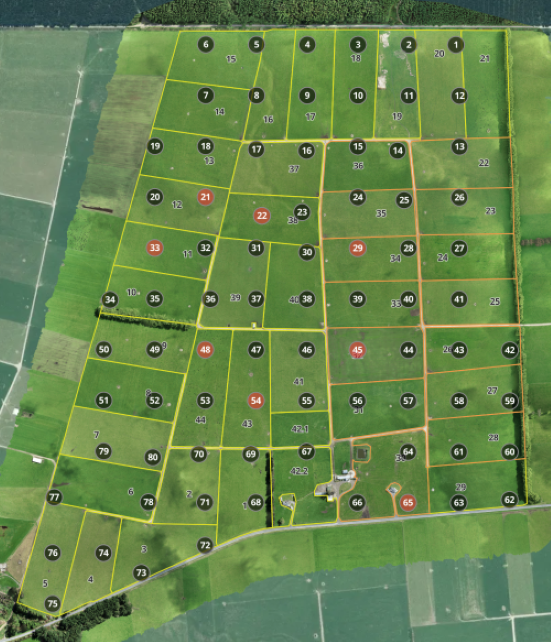
In March 2023, one Reporoa dairy farm became one of the first where we at Revive Soil Solutions conducted a full baseline 2-hectare grid soil test.
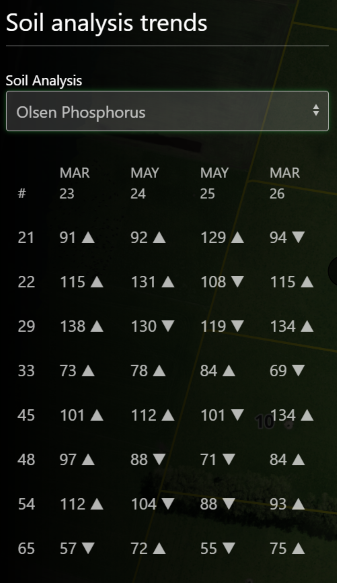
Each black circle on the map represented a soil testing point, with red circles marking annual monitoring points. The farmer was initially very sceptical. To build trust, we made a deal: if he wasn’t satisfied with the results, he would only pay 50% of the invoice.
When the results came back and we explained the implications for his fertiliser spend, his attitude changed completely. He immediately asked how quickly we could roll this out across his other eight farms.
He then posed a sharp, insightful question: “Why aren’t fertiliser companies and more farmers doing this?”
We explained that precision agriculture and variable rate technology were still relatively new concepts in New Zealand’s dairy sector at the time. Historically, nutrient advice has been based on broad maintenance calculations.
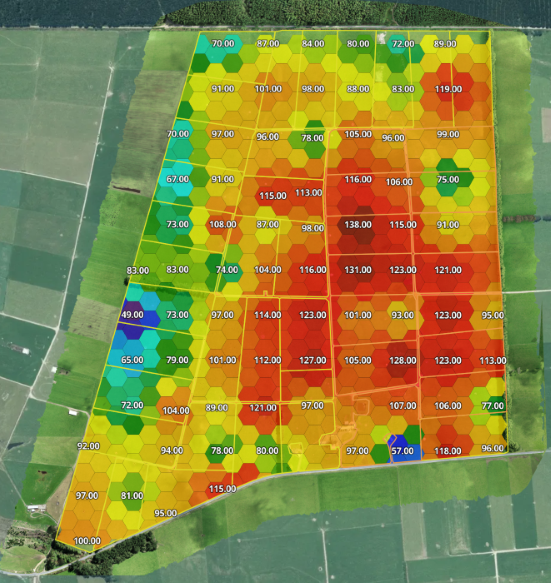
This farmer had always been diligent with his maintenance applications. It was no surprise that his Olsen P levels varied wildly, from 49 to 138, with an average of 96. At the same time, because he had applied little lime recently, some areas showed pH levels as low as 5.4.
We showed him that years of phosphorus applications had built up a large reserve pool of P locked up in the soil. The opportunity was to get the P cycle working properly so this stored nutrient becomes plant-available.
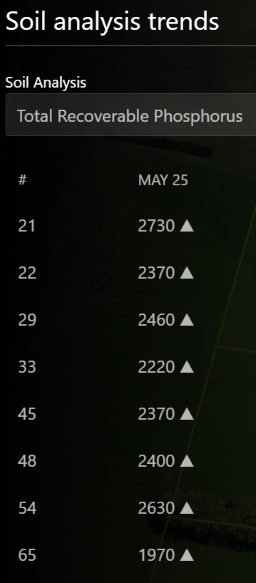
Still sceptical, he asked for proof. We ran Total Recoverable P tests on the monitoring points. The results confirmed substantial reserves.
The Bold Move — And the Results
We recommended he completely stop applying phosphate fertiliser. We even told him we believed he wouldn’t need to apply P again in his lifetime. In hindsight, that was a bold statement, but we had seen it work in other sectors and believed in the data.
We are now entering our fourth season. The data speaks for itself:
- Olsen P levels in the monitoring points remain stable, and in some cases are increasing as the P cycle reactivates.
- Pastures look excellent.
- Herbage tests show no deficiencies in macro elements. In some areas, we are now managing excesses rather than chasing deficiencies.
Economic impact on this 160-hectare farm:
- Conventional maintenance calculations suggested 48 kg P/ha/year.
- At the time, this equated to a saving of $292.80 per hectare on phosphate alone.
- Total annual saving on this farm: $46,848 on P fertiliser.
- Milk production increased by 10%.
- The farm received recognition from his milk company and bank for reducing emissions.
The Path Forward
New Zealand dairy farmers are among the most innovative in the world. They have already delivered significant reductions in nutrient losses through good farming practices. The next leap forward lies in integrating precision data into everyday decision-making and updating the tools and advice systems that support farmers.
At Revive Soil Solutions, we believe the future of sustainable, profitable dairy farming lies in independent, data-driven agronomy that harnesses detailed soil mapping, variable rate recommendations, and ongoing monitoring.